A well-optimized manufacturing floor isn’t just about speed. It’s about efficiency, precision, and cost control. One of the most effective strategies to achieve these goals is kitting. In electronics manufacturing, where complexity and customization are the norm, kitting plays a vital role in streamlining the assembly process, reducing errors, and maximizing throughput.
What is kitting?
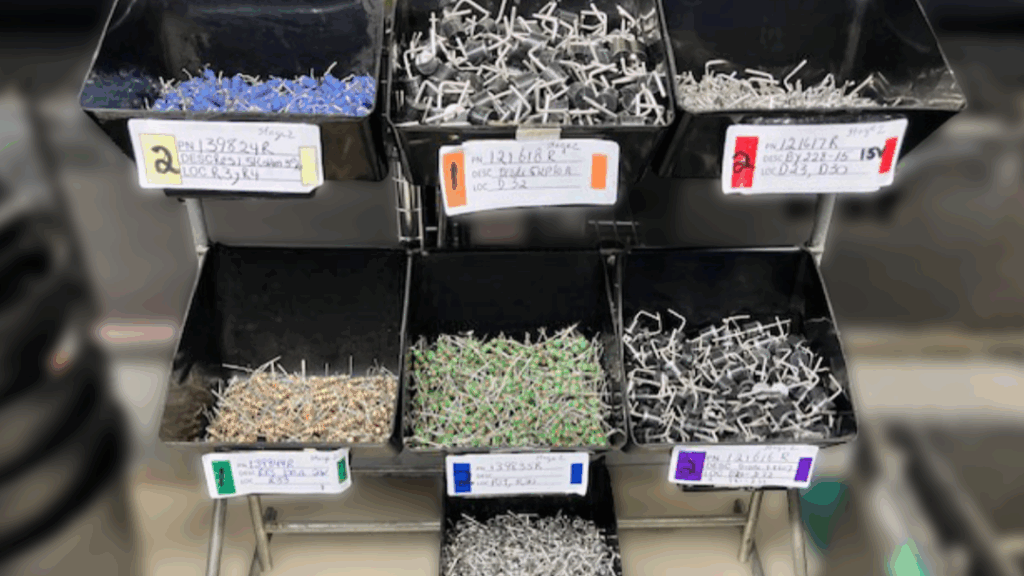
Kitting is the process of gathering all the parts and components required for a specific assembly or production task and packaging them together as a single unit or “kit.” This process can take place at various stages of production and is especially valuable in environments with high product variability or frequent changeovers.
Why Kitting Matters in Electronics Manufacturing
In electronics manufacturing, such as PCB assembly or box builds, components come in a wide range of shapes, sizes, and specifications. Managing these efficiently is critical. Kitting supports this by:
-Streamlining the Assembly Process: Workers receive all necessary components in one organized package, allowing them to focus solely on assembly.
-Reducing Assembly Time: With everything at hand, there’s no need to pause production to search for parts.
-Minimize Errors: Pre-sorted kits reduce the risk of using incorrect or incompatible components.
-Boosting Productivity: Workers can maintain a steady workflow, leading to higher output and fewer disruptions.
When Should Kitting Be Used?
Kitting is especially beneficial in the following scenarios:
-High-Customization Environments: When products have many configuration options.
-Contract Manufacturers (CMs): who build multiple different assemblies daily.
-Complex Assemblies: Like PCBs, oftentimes densely populated, where precision and part compatibility are critical.
Cost Savings Through Labor Efficiency
If you’re not sure if making an investment in creating a kitting team is right for your business, consider a small manufacturer with a team of three dedicated to kitting. Without them, up to twenty production workers might need to stop repeatedly to locate parts, wasting time and reducing efficiency. With a dedicated kitting team supporting them, those same workers can stay focused, completing tasks faster and with fewer interruptions. This translates directly into labor cost savings and improved profitability.
Better Inventory Management
Kitting also simplifies inventory control. Instead of tracking individual components, manufacturers can assign a single SKU to each kit. This not only speeds up material handling but also ensures that all required parts are available before production begins, preventing costly delays due to material shortages or defects.
Kitting in electronics manufacturing is more than just a logistical convenience; it’s a strategic advantage. By streamlining the assembly process, reducing time and errors, and boosting productivity, kitting helps manufacturers stay competitive in a fast-paced, high-precision industry. An efficient process is often a profitable one, and kitting is a key part of that equation.